

Ready to take your exam?
GSARA makes taking your amateur radio license exam straightforward — whether you're earning your first callsign or upgrading your existing license.
Technician, General and Amateur Extra examinations are available through the GSARA VE Team.
A few things to take care of first.
Exam day is easier when the paperwork is already handled. Before registering for a GSARA exam session, make sure you have these basics ready.
Get an FCC Registration Number.
You'll need an FCC Registration Number — commonly called an FRN — before taking your amateur radio examination.
If you already hold an FCC license, you probably already have one. New applicants can register for an FRN through the FCC's CORES system.
GET YOUR FRN →Use an email address you actually check.
Your email address matters after the exam. Licensing information and FCC application instructions may be sent electronically, so use an address you can access and monitor.
If you're testing online, you'll also want access to that email before and after your examination session.
Plan for the exam fee.
This is the examination fee associated with your GSARA Volunteer Examiner session.
A new amateur license may also require a separate FCC application fee after you successfully pass your exam.
Make sure your technology is ready.
GSARA's scheduled exam sessions are conducted online, so you'll need a suitable computer, internet connection, camera and microphone for your examination.
Give yourself time before the session to make sure everything works. Exam day is not the ideal time to discover your webcam hasn't worked since 2024.
First license or upgrade?
The basic testing process is similar, but what you need depends on whether this is your first amateur radio license or you're upgrading an existing one.
Technician
If this is your first amateur radio license, you'll start with the Technician examination.
Have your FRN ready before registering.General or Amateur Extra
If you're upgrading, your existing amateur radio license information becomes part of the examination process.
Have your current callsign and license information available.Don't pay the FCC before your exam.
For a new amateur radio license, the FCC application fee comes later. After you successfully pass and your application is submitted to the FCC, you'll receive instructions for paying the applicable FCC fee directly.
Watch your email after passing. The FCC gives applicants a limited payment window once the application reaches its system.
Choose an upcoming GSARA examination session and follow the registration instructions for that session.

Choose an upcoming GSARA exam session.
GSARA offers scheduled online amateur radio examination sessions for new applicants and operators upgrading their existing license.
Find a session that works for you, open the event for the complete details, and follow the registration instructions provided for that exam.
Take your examination remotely using your computer, camera, microphone and internet connection.
Whether you're earning your first license or upgrading an existing one, you can test with GSARA.
The examination session fee is separate from any applicable FCC application fee.
Find a date that works for you.
Select an exam session below to see its complete registration information and instructions.

What do you need on exam day?
You've studied, registered, and picked your exam date. Now let's make sure you're ready when it's time to meet your Volunteer Examiners.
GSARA's online examinations are supervised remotely. A little preparation beforehand makes the experience easier for everyone.
Photo Identification
Have an acceptable government-issued or other qualifying photo ID available so the examiners can verify your identity.
Candidates without photo identification, including minors, should review the alternative identification requirements before their session.
Your FCC Registration Number
Have your FRN available. This is the number associated with your FCC licensing records.
If you haven't obtained an FRN yet, complete that process before your examination.
FCC REGISTRATION SYSTEM →Computer & Internet Connection
You'll need a computer capable of accessing the online examination system and participating in a video-supervised session.
Use a reliable internet connection and make sure your browser and computer are working properly before the scheduled exam.
Camera & Microphone
Your Volunteer Examiners must be able to communicate with you and supervise your examination remotely.
Test your camera and microphone ahead of time. Follow the GSARA team's instructions regarding any additional camera or device requirements.
A Quiet Testing Space
Choose a quiet, private location where you can complete the examination without interruptions.
Clear your workspace of study materials, notes, books and other unauthorized items. Be prepared for a room or workspace check.
Existing License Information
Already licensed and taking an upgrade exam? Have your current callsign and license information available.
If you're claiming credit from a previous examination, have any applicable Certificate of Successful Completion of Examination (CSCE) ready.
Your testing space matters.
Because your exam is supervised remotely, the Volunteer Examiner team needs to verify that your testing environment meets the requirements for an examination.
You may be asked to show your workspace, adjust your camera, or remove items from the testing area before beginning.
Follow the instructions provided by the GSARA VE Team before your scheduled session.Yes, calculators are allowed.
An approved calculator may be used if its memory and stored formulas have been cleared. Smartphones and other prohibited electronic devices cannot be used as calculators.
For an online exam, confirm the calculator arrangements with the GSARA VE Team before your session.
What happens during your exam?
If you've never taken an amateur radio exam online, the process can sound a little intimidating. It really isn't.
You'll meet the GSARA Volunteer Examiner team, complete a few checks, take your exam, and find out how you did. Your examiners will guide you through the process.
Meet your Volunteer Examiners.
Use the instructions provided with your exam registration to join your scheduled online session. The GSARA VE team will welcome you and explain what happens next.
We'll verify your information.
Before testing begins, the examiners will confirm your identity and the information associated with your examination application.
If you're upgrading an existing license, this is also where your current license information and any applicable examination credit can be reviewed.
Your testing space gets checked.
Because the examination is being supervised remotely, the VE team needs to verify that your testing area meets the requirements for the exam.
Follow the examiners' directions. You may need to show your workspace, reposition a camera, or remove unauthorized materials before beginning.
This is the part you've been studying for.
Once everything is ready, you'll begin your examination using the online testing system.
Work through the questions at your own pace, read each one carefully, and don't let one difficult question derail the rest of the test.
No waiting a week for the results.
When you're finished, submit your examination. Your Volunteer Examiners will review the result and let you know whether you passed.
Passed? Congratulations.
Your Volunteer Examiner team will complete the examination process and explain what happens next.
If this is your first amateur radio license, remember that passing the test does not mean you can immediately transmit. Your license must first be granted by the FCC and your callsign must appear in the FCC database.
Nice work.
For a new license, your examination results move into the FCC application process. There are still a couple of steps before your callsign is issued, and we'll cover those next.
WHAT HAPPENS AFTER I PASS? →Don't disappear on us.
Plenty of good amateur radio operators didn't pass every exam on their first attempt. Now you know what the exam feels like and where you may need a little more study.
Talk with the VE team about your options, go back through the areas that gave you trouble, and try again.
ASK GSARA FOR HELP →The exam isn't there to prove you know everything about amateur radio.
It's there to show that you know enough to begin. Most of what makes someone a good amateur radio operator comes from what happens after the test.
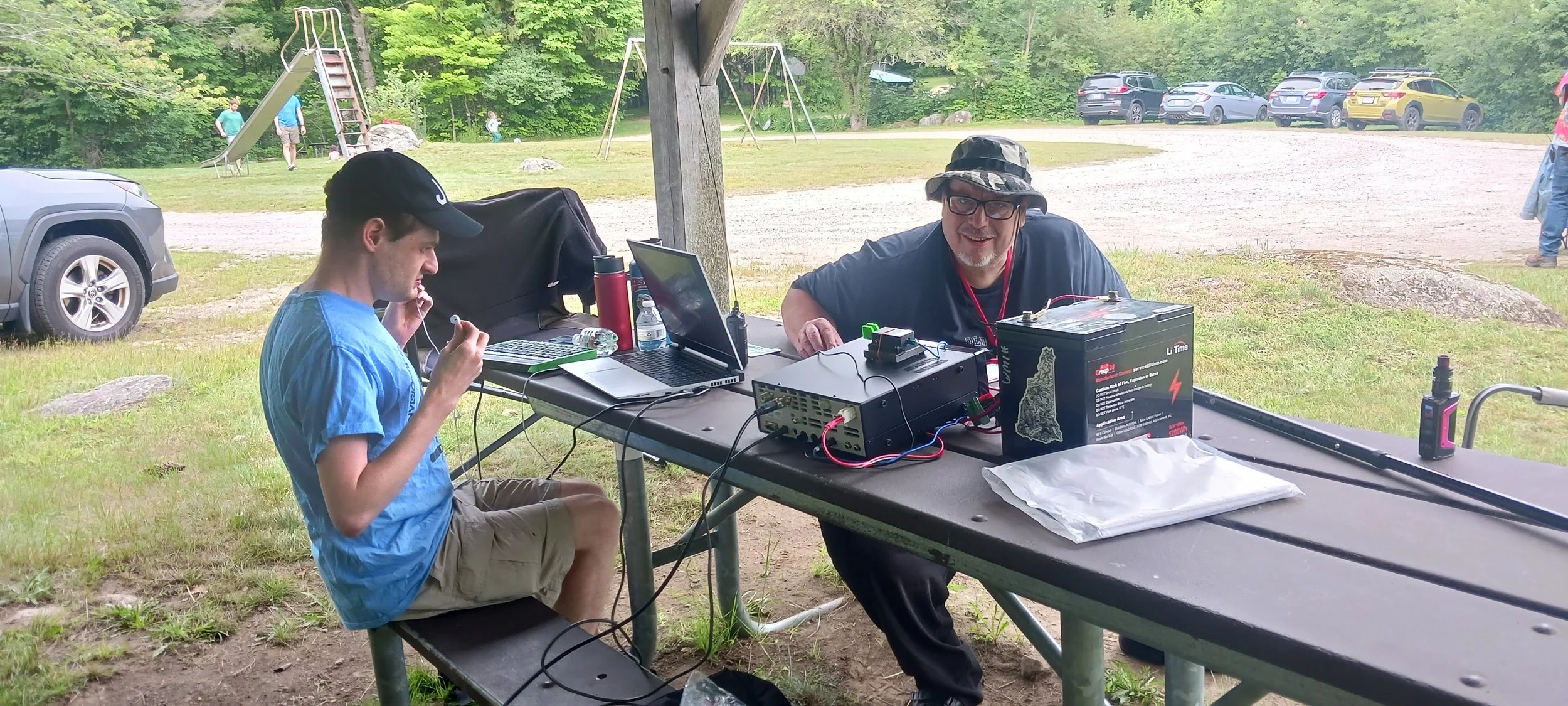
Congratulations.
You're almost there.
Passing your exam is the big part — but if this is your first amateur radio license, there are still a few steps before you can make that first contact.
Your Volunteer Examiners handle the examination paperwork. From there, your application moves to the FCC for processing.
Your VE team finishes the paperwork.
After a successful examination, the Volunteer Examiner team completes the required documentation and your application begins moving through the licensing process.
Your application goes to the FCC.
Once your successful examination is processed and submitted, the FCC creates the application associated with your new amateur radio license.
Pay the FCC application fee.
If you're applying for your first amateur radio license, the FCC will require its application fee before your license can be granted.
Follow the FCC payment instructions and complete the payment within the required payment window.
Wait for the license grant.
Once the applicable requirements are complete, the FCC processes the application and, when granted, your amateur radio license becomes part of the FCC database.
There's your callsign.
When your license grant appears in the FCC database, you'll have your amateur radio callsign.
That's the moment you've been waiting for.
Passing the exam isn't your authorization to transmit.
If this is your first amateur radio license, wait until the FCC has granted your license and your callsign appears in the FCC database before transmitting as an amateur radio operator.
See the callsign? Now you're a ham.Check the FCC database.
Once your license has been granted, you can find your callsign and official license record through the FCC's Universal Licensing System.
Now what?
This is where amateur radio stops being something you studied and starts becoming something you do.
Make your first contact.
Get on the air. Try a local repeater, join a GSARA net, or ask another member to help you make that first QSO.
Find someone to help.
Radios, antennas, programming and operating can feel like a lot at first. You don't have to figure it all out by yourself.
GSARA MENTORING →Come do radio with us.
Meetings, POTA activations, nets, Field Days and other club activities are where much of the actual learning happens.
EXPLORE ACTIVITIES →Your first year with GSARA may be on us.
Qualifying new amateur radio operators who earn their initial license through a scheduled GSARA Volunteer Examiner session may receive a complimentary one-year GSARA membership.
It's our way of helping you move from passing the exam to actually becoming part of the amateur radio community.
LEARN ABOUT GSARA MEMBERSHIP →
The exam got you the license.
Now go use it.
Ask questions. Make contacts. Try things. Build something. Break something. Learn why it broke. That's where the hobby really begins.
Ready for the next one?
GSARA exam sessions aren't just for new hams. If you're ready to move from Technician to General or from General to Amateur Extra, our Volunteer Examiner team can help you take that next step.
General
Expand your operating privileges and gain substantially more access to the HF bands.
Amateur Extra
Earn the highest amateur radio license class and the fullest operating privileges available.
We're here to help.
Whether you're still working through the material or you're ready to sit for the exam, you don't have to figure out the next step alone.