

You don't have
to be fast.
Morse code is still one of the simplest and most rewarding ways to communicate over amateur radio — and you can start with just a few characters at a time.
That's okay. You don't need to know Morse code to become an amateur radio operator — but learning it opens up an entirely different way to enjoy the hobby.
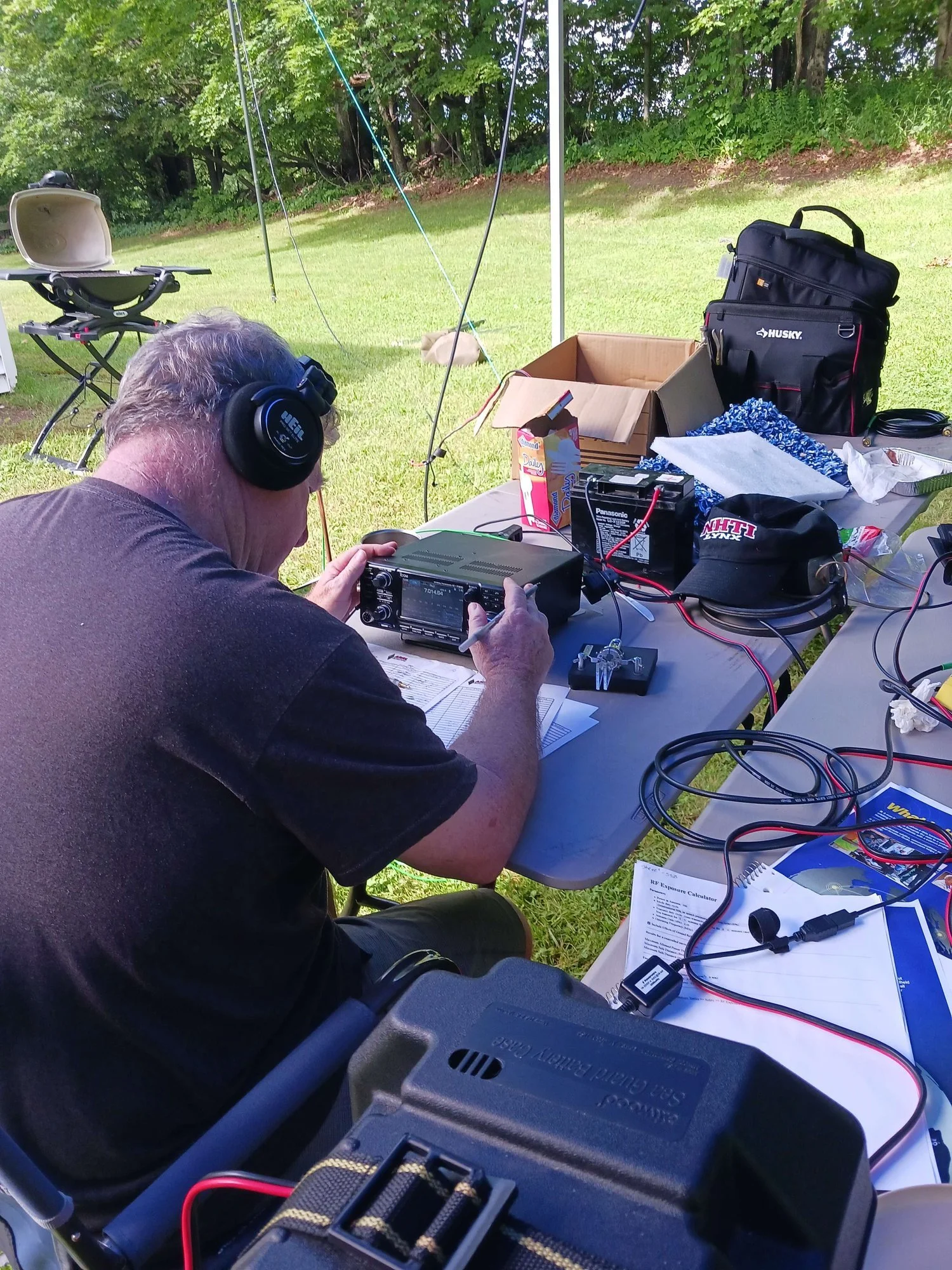
Why are hams still
using Morse code?
Because simple can be incredibly effective.
CW turns a radio, an antenna and a key into a remarkably capable station. For many operators, the challenge of learning the skill is part of what makes using it so satisfying.
It doesn't take much.
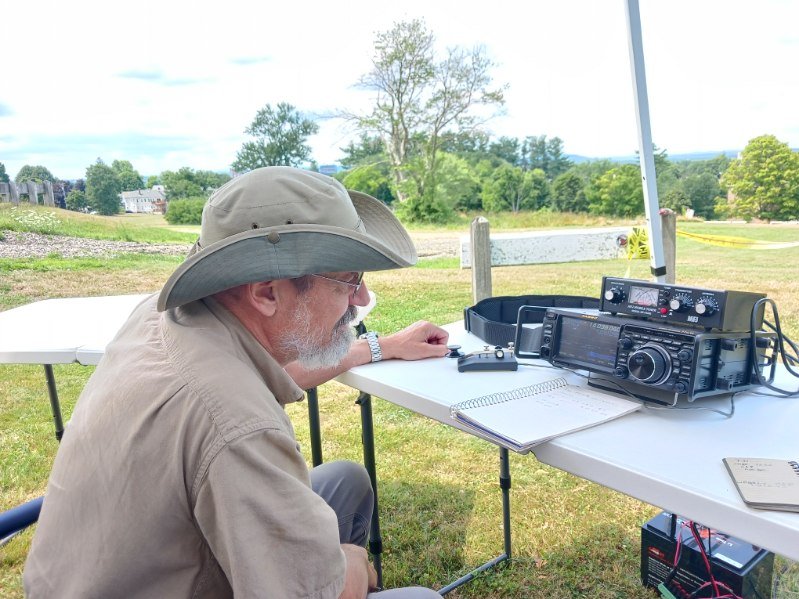
A radio, antenna and Morse key can make a very capable station without requiring a complicated setup.
A little signal goes a long way.
CW works well with modest power and simple antennas, making it especially useful when conditions or your station are less than perfect.
It's made for small stations.
Lightweight radios, small keys and lower power make CW a natural fit for portable operating, parks, summits and field stations.
You get better by doing it.
Learning to recognize characters by sound and carry on a contact gives you something you can continually improve every time you get on the air.
It's not about using old technology.
It's about how much you can do with so little.CW and portable operating are a natural combination.
When every ounce, watt and piece of equipment matters, CW lets you build a small station and still make contacts well beyond where you're operating.
Learn the sound.
Not the dots.
Morse code becomes much easier when you stop trying to translate dots and dashes in your head.
The goal is to hear a character and recognize it automatically — the same way you hear a spoken word without thinking about how every letter is spelled.
Seeing dots and dashes, translating them into a pattern and then remembering the letter adds an unnecessary step.
With practice, the sound itself becomes the character. You hear it and know what it is without translating anything.
Build the skill a little at a time.
Learn a few characters.
Don't tackle the entire alphabet at once. Start with a small group of characters and learn to recognize each one by sound.
Practice recognition.
Listen to short practice sessions regularly. You're training your brain to connect a sound directly with a character.
Grow your character set.
Once the characters you're practicing feel comfortable, introduce a few more and continue building from there.
Start hearing words.
Move from individual characters into call signs, common abbreviations and short words you'll actually hear on the air.
Make the contact.
You don't need impressive speed. When you're comfortable copying a basic exchange, try a real CW contact.
Ten minutes regularly beats an hour once in a while.
CW is a learned skill. Short, consistent listening sessions give your brain time to build the connection between the sound and the character.
Accuracy and recognition come first. Speed follows naturally as the sounds become familiar.

What does a CW
contact look like?
Much simpler than you might think.
Most basic CW contacts follow a familiar pattern. Once you recognize the pieces, you don't have to decode an entire conversation from scratch.
CQ CQ CQ DE N1ABC
Call CQ.
You're announcing that you're looking for a contact and giving your call sign.
W1XYZ DE N1ABC
Exchange call signs.
Once another station answers, make sure you've copied their call sign correctly and they have yours.
RST 579 NAME ERIC QTH NH
Share the basics.
A simple contact might include a signal report, your name and your location. It doesn't need to become a long conversation.
TNX QSO 73
Say thanks and 73.
That's a contact. Thank the other operator, send your best regards and you're done.
CW has its own shortcuts.
You don't need to memorize dozens of abbreviations before getting started. A handful will make a basic contact much easier to understand.
Slow down, send clearly and give the other operator time to work with you. Every CW operator had a first contact too.
Don't learn it
alone.
One of the advantages of belonging to an amateur radio club is having other operators around when you want to try something new.
CW is no different. Club activities give you opportunities to see how other operators use Morse code, ask questions and get some help when you're ready to try it yourself.
Field Days
Field Day is a great place to see different operating styles and modes in action. If CW is being used, sit down, listen and see how an experienced operator handles contacts.
EXPLORE FIELD DAYSPortable Radio
Parks and summits are excellent places to experiment with smaller stations. CW can be especially attractive when you want to keep the radio, power and operating setup simple.
Find a CW operator.
Sometimes the easiest way to understand a new mode is to sit beside someone already using it. Ask questions, listen to a few contacts and see the equipment in action.
FIND A MENTORAsk someone to show you.
You don't need to buy a key, download five apps or memorize the alphabet before talking with someone who operates CW.
Start by listening.Come to a GSARA activity.
Meetings, Field Days, portable activities and other club events put you around operators exploring different parts of amateur radio. Show up and start asking questions.
VIEW CLUB CALENDAR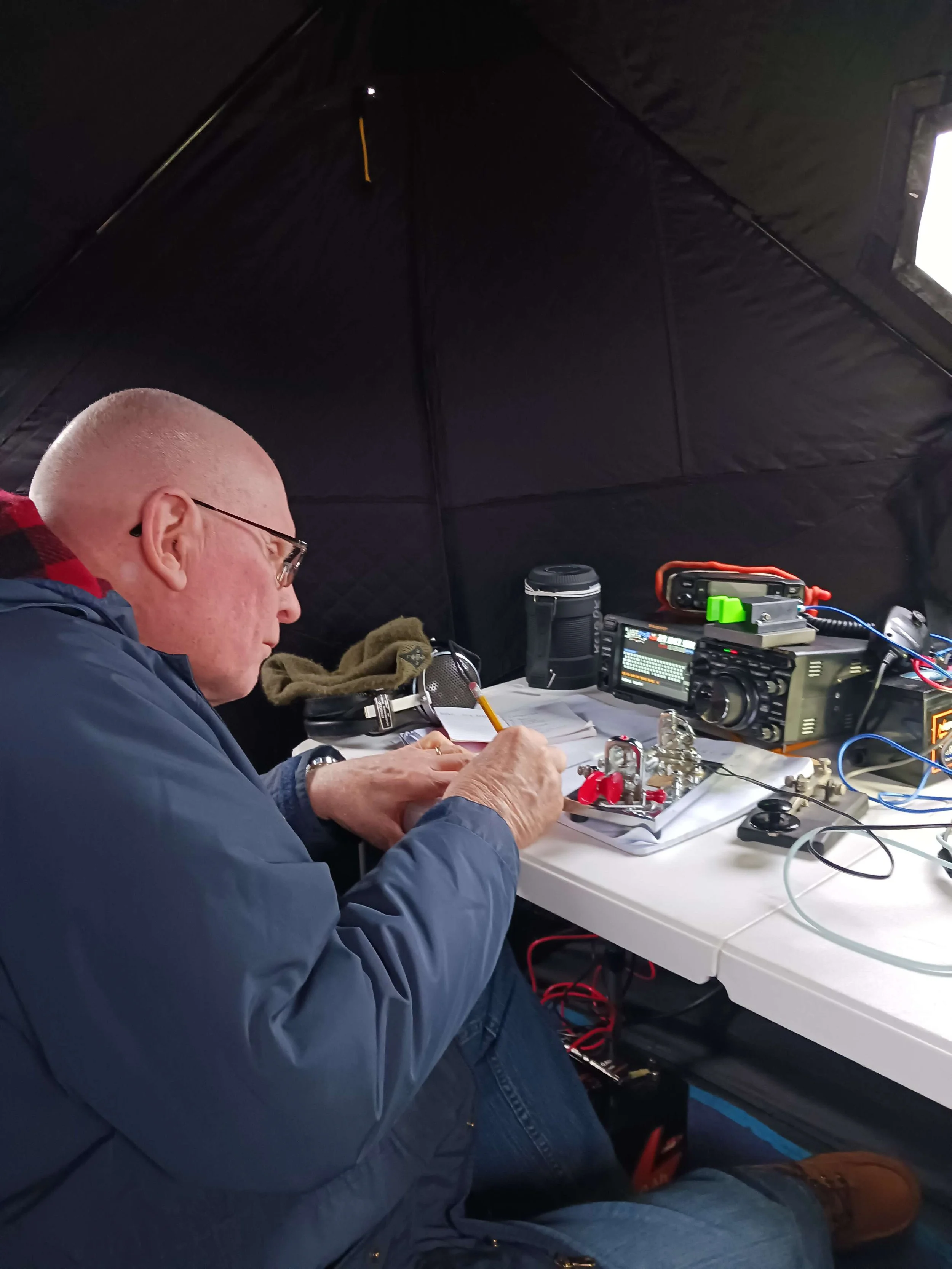
Hear what you've
been missing.
You don't need to be fast. You don't need to know every abbreviation. And you definitely don't need to wait until you're an expert.
Learn a few characters. Spend some time listening. Find someone who operates CW. Then, when you're ready, put your call sign on the air.